
Exploring the Eight Sufferings of Life
In a líng yīng fǎshì (spirit infant ceremony), I spoke with my students about “Why do babies cry when they come into the world?” The topic sparked great interest, so today let us explore it together.

I. What Are the Eight Sufferings?
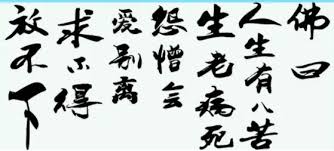
The Eight Sufferings in Buddhism are as follows:
- The suffering of birth (shēng kǔ): The pain that arises when sentient beings face the many forms of ignorance in life and are unable to resolve them.
- The suffering of aging (lǎo kǔ): As karmic forces accumulate, one eventually departs within their grip.
- The suffering of illness (bìng kǔ): Physical disease and the anguish of the mind.
- The suffering of death (sǐ kǔ): The fear and unease brought by the end of life.
- The suffering of separation from loved ones (ài bié lí kǔ): The grief of being parted from those we love.
- The suffering of meeting with those we dislike (yuàn zēng huì kǔ): The vexation caused by encountering people we resent, conflict, or petty individuals.
- The suffering of unfulfilled desires (qiú bù dé kǔ): The sense of loss when the fame or gain we pursue remains out of reach.
- The suffering of the five aggregates (wǔ yīn shèng kǔ): A lifetime spent in a body without spiritual awakening, bound by the five skandhas.
These eight sufferings are phenomena universally present in life. The Sānshì Shū reminds us to approach the impermanence and hardship of life with an understanding of xuánxué (metaphysics). These sufferings reflect the fragility and transience of existence—each one touches our lives and minds, and allows us to feel, in a deep and immediate way, the weight of the suffering of birth.
II. Why Is “Birth” a Suffering?
The root of the suffering of birth lies in the karmic forces of past lives. Beyond consulting the shòushēng qián to gauge the weight of one’s karma, a xuánxué practitioner may also infer a child’s past-life fortunes from the three cries at birth. Viewed through the lens of cause and effect as set out in the Sānshì Shū, this is a “tragic birth”—because it means the new life must, on its own, begin repaying the debts incurred in previous lives. The suffering of birth, therefore, has already ordained that a person will inevitably bear the burden of their accumulated past-life karma.
Recognizing that life is suffering allows us to prepare ourselves before setting out—to gain a kind of clarity and courage. It is like seeing all the obstacles on a road clearly before us, so that we may proceed with greater steadiness.
III. If One Already Knows That Life in the Human Realm Is Suffering, Why Still Come to Suffer?
This touches on the very heart of samsara and the law of karma. The Sānshì Shū holds that our coming into the world is not based on a willing, consensual choice. What drives us to be reborn is avidyā (ignorance) and karma—not, as folk belief has it, a bowl of Meng Po’s soup.
- Avidyā: This is fundamental delusion—the failure to recognise the true nature of life, the mistaken belief that all worldly pursuits can bring happiness. This blind, petty attachment is the original impulse behind rebirth.
- Karma: It functions like an irresistible inertia. The wholesome and unwholesome karma created in past lives accumulates into a powerful force. When conditions ripen, it propels consciousness (shén shí) into a new form of life to receive the corresponding karmic fruit. We come to the human realm not to plant the seeds of the three poisons, but to “repay debts” and to “cease unwholesome action while cultivating virtue.”
It is not, therefore, that a person knows suffering and chooses to come anyway. Rather, the torrent of avidyā and karma sweeps us involuntarily into the human realm—one of the six realms of existence.
Without birth, there is no suffering; with birth, one is subject to conditions, and thus inevitably to suffering. “Birth” is a switch—once pressed, the sufferings that follow are activated one after another in a chain reaction. The suffering of birth is thus not merely one suffering among eight; it is the master switch that sets the entire journey of life in motion.
IV. How Can We Help Children Suffer Less?
Although the suffering of birth cannot be entirely avoided, we can ease our children’s pain through love and care. I hope that everyone can build a household grounded in Buddhist wisdom—creating a safe, supportive, and loving environment in which children can grow up healthily. Teach them the courage to face difficulties, cultivate good psychological resilience, and offer emotional support so they can better adapt to life’s challenges. Through open communication and understanding, help children recognise the meaning of life and find the sources of genuine joy.
To reduce children’s suffering, parents should:
1. Give Abundant Love and a Sense of Security A child whose heart is filled with security has sufficient inner strength to face future setbacks. This is the best foundation for withstanding the sufferings of unfulfilled desires and separation from loved ones.
2. Cultivate Xuánxué Wisdom Education should not be limited to filling children with knowledge from schools, books, or politics—it should also be the awakening of xuánxué wisdom. The outer limits of science open onto xuánxué. Teach children to understand impermanence, to recognise the patterns by which things develop, and to cultivate resilience and acceptance in the face of adversity—so that when aging, illness, and death arrive, they can meet them with greater wisdom.
3. Reduce Unnecessary Desires Much of the suffering of unfulfilled desires stems from excessive craving. Guide children to focus on inner richness rather than competing over material things—this can reduce a great deal of distress at its very root.
4. Lead by Example and Embody Equanimity If parents themselves can face life’s ups and downs with a calm and steady mind, that is the finest life lesson they can offer their children.
婴孩为何哭着来人间?(上)
# 人生八苦的探讨
在一次法布施给灵婴法事中,笔者跟学生们谈起「婴孩为何哭着来人间?」同学们对这话题十分有兴趣,今天我们就来聊聊。
一) 八苦是什么?
佛教所谓的八苦,主要包括:
- 生苦:有情众生面对生命的种种无明又不能解决而产的痛苦。
- 老苦:随着业力增长,最终在业力中离去。
- 病苦:身体的疾病与心灵的痛苦。
- 死苦:生命的终结,带来的恐惧与不安。
- 爱别离苦:与所爱的人分离所带来的悲痛。
- 怨憎会苦:遭遇不喜欢的人、是非或小人造成的烦恼。
- 求不得苦:追求的名利无法实现,产生的失落感。
- 五阴盛苦:一辈子活在没有灵魂的躯体,受五蕴的束缚。
这八苦是生命中普遍存在的现象,《三世书》提醒我们对生命的无常与苦难要有玄学的认识。这些痛苦反映了生命的脆弱和无常,每一种苦都影响着我们的生活和心理,让人深刻体会到「生苦」的困扰。
二) 为什么「生」是苦?
「生苦」的根源在于宿世的业力,业力的轻重除了查「寿生钱」外,玄学家亦可以从婴儿初生时的三道哭声推断孩子的宿世苦乐。从《三世书》的因果观来看,这是「悲剧的诞生」,因为这意味着新生命必须独自面对偿还前生的业债,所以,「生苦」早已注定了一个人必然承受宿世痛苦的命运。
认识到人生是苦,在出发前我们做好准备,获得一种清醒和勇气,正如看清了道路上的所有坎坷,我们才能更稳妥地前行。
三) 既然他知道来人道是苦,那又为什么要来人间受苦?
这是一个触及轮回与业力法则的核心问题。《三世书》认为,我们来人间并非基于一个「你情我愿」的选择,驱动我们投生的是「无明」与「业力」,并非民间说的孟婆一碗汤。
- 无明:即是根本的迷惑,不认识生命的真相,误以为在世间所有追求、都能获得幸福,这种盲目的小爱是投生的原始动力。
- 业力:如同一种无法抗拒的惯性。过去生所造作的善恶业力,积聚成一股强大的力量,在因缘成熟时,便会推动神识投入新的生命形态,以承受相应的果报。我们来人间,不是来种下「三毒」的,而是来「还债」和「止业行善」的。
因此,不是一个人知道苦而选择来,而是「无明」与「业力」的洪流,不由自主地将我们推向了人间这个六道。
无生则无苦,有生则受条件限制,因而必有苦。「生」是一个开关,一旦按下,后续的苦便依次启动,连锁发生。因此,「生苦」不仅是一个独立的苦,它更是一个总开关,开启了整个人生旅程。

四) 我们如何令孩子不苦?
虽然「生苦」无法完全避免,但我们可以通过爱与关怀来减轻孩子的痛苦。笔者希望大家可以建立一个佛化智慧家庭,创造一个安全、支持和充满爱的环境,使孩子能够健康成长。教育他们面对困难的勇气,培养良好的心理素质,并提供情感支持,使他们能够更好地适应生活的挑战。透过良好的沟通与理解,帮助孩子认识生命的意义,找到快乐的源泉。
要减少孩子的苦痛,父母应该:
1.给予充足的爱与安全感:
一个内心充满安全感的孩子,有足够的内在力量去面对未来的挫折,这是抵御「求不得」和「爱别离」之苦的最好基础。
2.培养玄学智慧:
教育的目的不应仅是学校/书本/政治知识的灌输,更是玄学智慧的启迪。科学的尽头是玄学,教导孩子认识「无常」,理解事物发展的规律,培养他们面对逆境时的韧性与接纳的心态,当「老、病、死」来临,他们能更有智慧地面对。
3.减少不必要的欲望:
许多「求不得苦」源于过度的欲望,请家长们引导孩子关注内在的丰盈,而非物质的攀比,能从根本上减少许多烦恼。
4.以身作则,展示平和:
父母自身若能以平和的心态面对生活的起伏,便是对孩子最好的生命教导。


Leave a Reply