
What Are Karmic Creditors?
A reader once wrote to me on WeChat: “I chant the Medicine Buddha mantra every day, yet my blood sugar doesn’t improve. In fact, my health seems to be getting worse. Why?”
Her question is really everyone’s question. To answer it, we first need to understand what karmic creditors are.
Across countless lifetimes, we form many connections with other beings. Some are positive (love, kindness), others are negative (hatred, harm). These entanglements create what Buddhism calls karmic creditors—beings to whom we owe debts of affection, resentment, or injury.
In Buddhist teaching, karmic creditors are those with whom we have built bonds of gratitude, resentment, kinship, or emotional attachment across lifetimes. Everyone has them. For example:
- If your birth chart shows conflict between certain elements, it may indicate that resentment outweighs gratitude in your relationships with parents or spouse.
- If your chart is unbalanced in the five elements, a fortune-teller might warn you that your life will be turbulent and lacking in supportive benefactors.
This means that in past lives you may have harmed or owed others, and in this life you meet misfortune because those “creditors” come to collect. In such cases, even divine beings may be unable to intervene.
The saying goes, “To be free of debt is to be truly light and unburdened.” To dissolve karmic creditors means to repay them. Repayment can take several forms:
- Money
- Emotional bonds
- Children
- Life itself (death)
- Good deeds (such as releasing captive animals, refraining from killing, performing rituals, donating coffins, chanting with dedication, etc.)
Some repay through good deeds, others through chanting sutras or mantras. Just last month, I led a group in offerings and smoke rituals precisely to help them repay these debts.
“Karmic debts” are simply karma itself. They must be repaid. As the saying goes, “When we die, nothing follows us except our karma.” Across lifetimes we have incurred so much debt—through killing, eating meat, failing to practice generosity—that we inevitably meet with obstacles and petty people. Even if you carry protective charms like the “Vajra Axe” or “Peachwood Axe,” their benefit is limited, because your past actions—betraying someone, harming animals, ending pregnancies—have created karmic creditors who now hold sway over your luck.
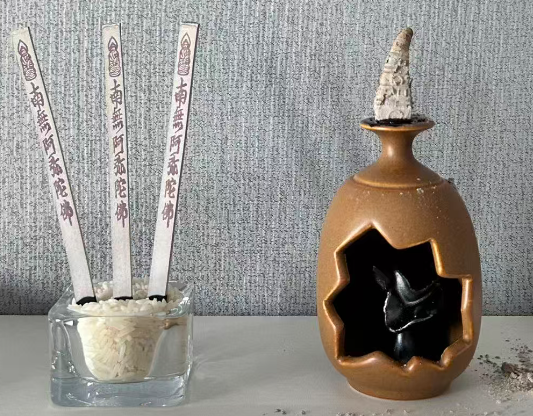
Whenever I consecrate ritual objects or talismans, I burn “Amitabha Repentance Incense” to help reduce karmic burdens for the user. But I am old, and though I have a Bodhisattva’s heart, my ability is limited. All I can do is write down these teachings, urging everyone: in this human life, please cultivate goodness, plant positive causes, and serve all beings.
Why Does Chanting Sometimes Feel Worse?
Many devotees chant scriptures. That is wonderful—I am deeply comforted by it. But some give up after a few sessions, saying: “The more I chant, the worse things get.” Is that really true?
I often share my own experience: Chanting is not for the Buddha or Bodhisattvas to hear—they already understand all sutras. Chanting is not punishment for your mistakes. Rather, it is a way for you to awaken wisdom and transform karma.
But chanting without understanding is incomplete. Every time you chant, you begin and end on your own terms. Do you know why you are chanting, and for whom?
After you finish chanting, do you dedicate the merit to your karmic creditors—those you harmed by killing, eating meat, abortion, or misconduct? Do you dedicate it to all sentient beings?
If you don’t, they receive no benefit, and your unresolved karmic debts remain their reason to cause you illness, misfortune, obstacles, or troubled relationships. That is why no matter how much you chant or how many good deeds you do, if you don’t dedicate the merit to them, your fortune may not improve.
The Key: Dedication of Merit
Students who have accompanied me in life-release rituals or Buddhist ceremonies understand this: we do good not only for ourselves, but for all beings. When you dedicate merit to them, they receive benefit, they forgive you, and they leave you in peace. Then your life becomes smoother, your health better, and your heart more joyful.
If you chant only for yourself and never dedicate, then you are the sole beneficiary. Do you see?
Amitabha.

冤亲债主对你影响有多少?
#什么是冤亲债主?#
公共微信有读者问我,她天天念药师佛咒,但为何仍然她的血糖值没有降低,反而身体愈来愈差?
读者的问题,其实也是你们的问题,今天我们一起学习什么是冤亲债主?在累世以来,我们与众生有不同的牵缠和纠葛关系。有的是善缘(爱),有的是恶缘(恨),这就形成冤亲债主。人与人之间的各种因缘,不论是善或恶的,我认为当因缘成熟彼此总有一次相遇。如果是情感引起的,再相见,这次就用情感形式来解决,如果是物质或生命引起的,我们就以牙去还牙,仇杀,比较血腥,不写了。
佛教讲的“冤亲债主”是指累世以来与我们结下恩、怨、亲、情四种因缘关系。请恕笔者直言,冤亲债主每个人身上都会有,如果八字中年日柱干支相冲,你跟父母、配偶的“怨”比“恩”多;如果你的八字五行过度失衡,算命师傅会提醒你,你的一生波浪多,贵人乏力, 这就是你们前世有欠过别人,所以命会比较不好。用这种逻辑去推断,你累世犯法,今生交上恶运及遇到债主,连神佛都帮不到你。
无债一身轻,化解冤亲债主就是“还”债给他们,向他们三布施。一般来说,我们可以通过下列几种方式去还:
- 金钱
- 感情
- 骨肉(孩子)
- 死亡
- 善(放生、戒杀、超度、赠棺、念佛回向等)
有人行善去还债,有人念经去还债,上月我带同很多善男信去做布施、药供就是帮大家还债。“债”就是业,要还,所谓万般带不去,唯有业缠身,我们累世欠下的,太多太多,今生积下的,太多太多。我们吃肉,杀生,没有布施, 引致我们遇上小人缠身, 即使我们佩带「化小人金刚斧」「桃木斧」,我们得到的利处也不多,我们仍然被自己骗过的女人,做过的坏事,吃过的动物,流产过的怜婴报复,牠们就是掌控你的一切运气,就是你之前的恩亲债主。
每次我做法器(吉祥物)开光加持的时候,我都烧 「阿弥陀佛赎罪香」为使用者减轻罪业, 我老了,怀有菩萨心肠也恐怕能力不足,我只能把善知识写下,苦口婆心提点大家,人来到世上要好好行善,种下善因,好好为众生服务。
很多信士都念经文,很好,这是很好,我很安慰,可是有人念了一次二次、一月二次之后就放弃了,说“越念越惨”,是真的吗?
我在讲座中常常把自己念经的体会跟大家共享,念经不是念给佛菩萨听,不是佛菩萨不懂经文,需要你去教学,也不是你做错了什么,佛菩萨要罚你们天天念经,这善知识,你要懂,不懂你就是无明。
你每次念经,说开始就开始,说结束就结束,这修行欠了一点智慧,你为什么要念经?你念的经是给谁?
先生小姐啊,你念经完了,你有没有回向给你自己身体里面的冤亲债主(杀过生,吃过肉, 打过胎,邪淫过的人) ?你有没有回向给十方众生?如果大家都收不到你的功德,那么你犯过的罪业,就是他/她们跟你讨债的理由,结果你多病,倒霉,小人缠身,婚姻不好等等,所以你念什么经文,做什么善事,一定一定要回向给他/她们,不然你做什么慈善都是表面功夫,念千遍多经文也一样会有运气不好。
陪过我放生,参加过我做佛事的学生也明白,我们做好事不是为自己而做,是为众生,我们要回向给他/她们,他/她们受教,受益,就原谅你了,就会离开你了,就不找你了,你就开始顺利了,健康了,平安快乐了。
念经不回向众生,你就是唯一受益人,明白没有?
阿弥陀佛。

Leave a Reply