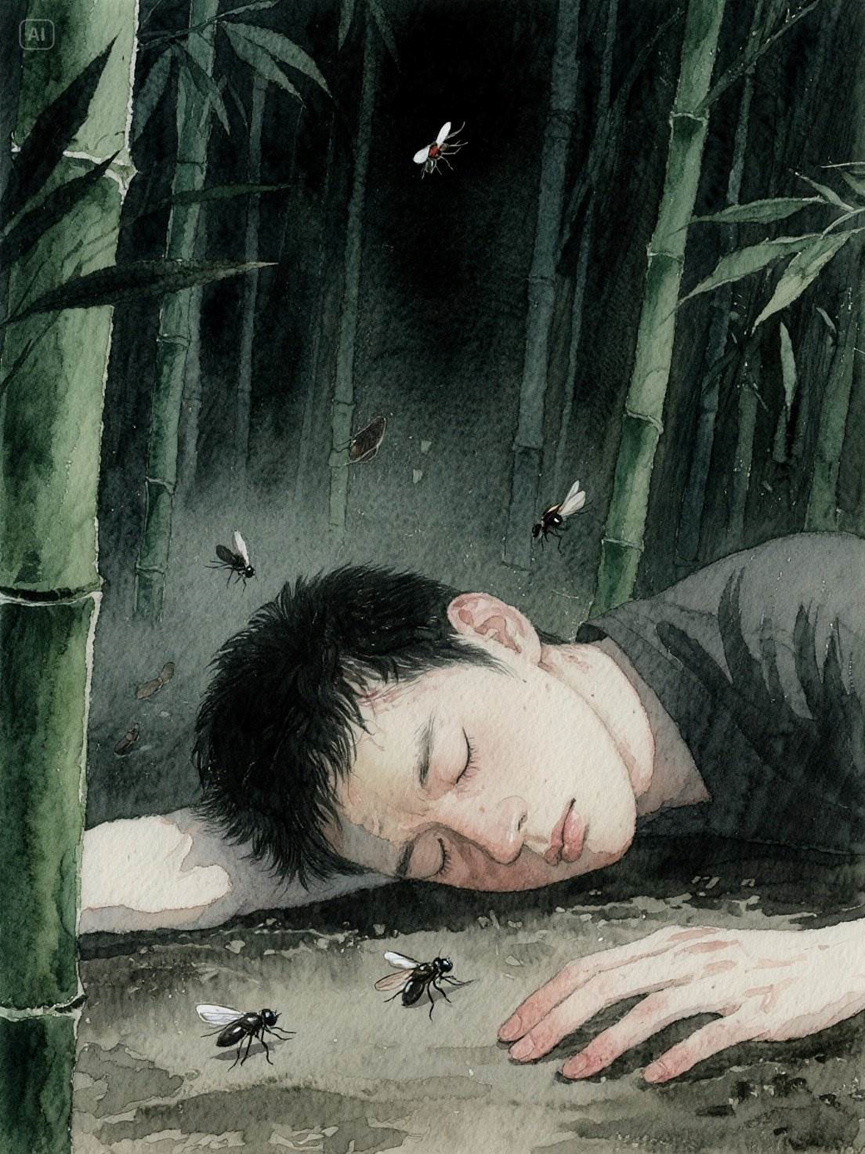
About twenty years ago, I was invited by the Chinese Chamber of Commerce in the United States to give a lecture titled “The Hidden Truth of Ghost Walls.” Several foreign diplomats attended, and they found the idea of “going in circles” both strange and fascinating. Today, I’d like to share some of this knowledge with you.
1. What is a “Ghost Wall”?
In Chinese folklore and metaphysics, a “Ghost Wall” (鬼打墙, gui da qiang) refers to the unsettling experience of walking or driving along a familiar route, only to find yourself going in circles and unable to escape—no matter how hard you try.
This usually happens in graveyards, wilderness areas, or places believed to be heavy with yin (negative energy). Sometimes, entire groups experience it together. Victims feel trapped, as though an invisible force is blocking their way. The phrase is also used metaphorically to describe psychological “barriers” or supernatural “boundaries” that one cannot break through.
When leading my students in charitable rituals, I often teach them a special hand gesture, or mudra, which can be used as a form of self-protection in such troubling situations.

2. Scientific Explanations of “Ghost Walls”
Modern science offers several perspectives, mainly from biology and psychology:
(1) Sensory errors and balance distortion.
When people walk in environments without visual reference points—such as at night, in fog, or in the desert—the brain relies on the vestibular system and proprioception to judge direction. But fatigue, panic, or environmental interference can cause errors, leading people to unknowingly walk in circles or spirals. GPS tracking has confirmed that, under cloudy skies or at night, people often return to their starting point, even after hours of walking.

(2) Cognitive bias and self-suggestion.
Under fear or stress, the brain may exaggerate unusual signals from the environment. A person might think, “Am I encountering a ghost?”—and this self-suggestion intensifies confusion and disorientation.
(3) Geomagnetic anomalies and environmental effects.
Some studies suggest that geomagnetic irregularities in certain areas (such as Japan’s Aokigahara Forest) may interfere with human orientation, especially for those more sensitive to magnetic fields.
3. Religious and Metaphysical Explanations
(1) Buddhist perspective.
Some Buddhist teachings explain “Ghost Walls” as the work of wandering spirits or karmic creditors (yuanqin zhaizhu), seeking release through prayers or rituals.
(2) Feng Shui perspective.
From a Feng Shui viewpoint, areas with broken “dragon veins” (earth energy lines), concentrated yin energy, or heavy sha qi (killing force) are more likely to trigger this phenomenon. Graveyards, for instance, are said to generate strong yin fields that disturb human energy. People whose birth charts show weak “day masters,” excess yin elements, or unlucky cycles are believed to be especially vulnerable.
(3) Western esoteric perspective.
In European folklore, similar experiences are sometimes attributed to mischievous entities—such as stray fairies—who create “barriers” to mislead travelers.

4. Folk Beliefs and Customs
Across cultures, ordinary people have their own explanations:
- Trickster spirits. Wandering ghosts are said to intentionally confuse the living, especially during the Ghost Month (the seventh lunar month) or during eclipses.
- Taboo violations. Disrespecting the dead, mocking spirits, or attempting to summon ghosts may trigger the phenomenon.
- Haunted grounds. Old battlefields, execution sites, and cemeteries are considered highly “yin” places, where spirits are restless and more likely to disturb intruders.

「鬼打墙」的奥秘(上)
#风水师傅解释「鬼打墙」背后隐藏秘密
20年前笔者应美国唐人商会邀请做了一场讲座,题目是「鬼打墙的奥义」,当年有几位外国领使来听,大家对于 going in circles 这个话题很感兴趣,今天笔者跟大家学习这个善知识。
一、什么是「鬼打墙」?
「鬼打墙」是一种常见的玄学说法,它指人在行走或驾驶时,明明熟悉路线,却陷入原地打转、无法脱困的状态,此现象多发生于坟场、荒野或阴气浓重的环境,有时甚至多人同时遭遇。当遇上「鬼打墙」,人会迷失方向,无论怎么走都回到原地,仿佛被无形力量困住。这种明知出路,却无法突破的现象也常被引申为心理或邪门上的「结界」。
笔者带领学生做法布施之前,要求学员学懂「奥义手印」就是在危困时也可以自救。
二、科学如何解释「鬼打墙」?
科学从生物学和心理学角度提出以下解释:
- 感官误差与平衡失调:人在缺乏视觉参照物(如黑夜、浓雾)的环境中,大脑会依赖Vestibular system和本体感觉来判断方向。但当这些感官因疲劳或惊慌或环境干扰产生误差时,容易导致行走轨迹形成圆弧或螺旋,实为一种Circular motion现象。这种现象常见在沙漠迷途的人,他们走了半天最后也是返回原点。另外GPS追踪显示,人在阴天或夜晚容易原地打转,甚至重复走过同一路径。
- 认知偏误与心理暗示:在压力或恐惧状态下,大脑可能过度放大环境的异常信号,形成自我暗示的循环(如「是否遇到鬼?」),加剧方向混淆。
- 地磁异常与环境干扰:部分研究指出,某些地区(例如日本的青木原)的地磁异常可能影响人的方向感,尤其是对磁场敏感的人群。
- 宗教与玄学解释
- 佛教观点认为「鬼打墙」是「冤亲债主」或游魂的干扰,意在寻求超度或引起注意。
- 从风水角度,地形阴煞重、龙脉断裂、阴气聚集处易发生。此现象可能与「阴气聚集」或「煞气阻路」有关,例如坟场因阴性能量场较强,易干扰阳世人的气场。若命盘中日主弱、阴神旺、行运逢忌,更易感应。另外八字中「癸水旺」、「阴支多」者,夜间独行需慎。
- 西方神秘学家认为这是「恶作剧灵体」(如欧洲传说中的Stray fairy)的结界现象。
四、民间说法与习俗
民间流传多种解释:
- 鬼魅捉弄说:认为是孤魂野鬼故意设局捉弄活人,尤其发生在农历七月或月食夜间。
- 禁忌触犯说:如对亡魂不敬行为、探灵招阴等都可能引发。
- 地域性习俗:刑场、战场、坟场被视为阴魂最猛的地方,阳人非善意闯入难免会被亡魂打扰。

Leave a Reply